23 may 2026
Marine Spare Parts Management for Maximum Fleet Operations
The management of marine spare parts in marine transport remains one of the least
appreciated areas of ship management. Most operators pay attention to maintenance and
training for their staff, but completely disregard the logistics involved. If a crucial
part malfunctions either while out in sea or in some faraway port, spare parts become
the determining factor for resuming operations.
What is Marine Spare Parts Management?
Management of marine spare parts is about organizing, acquiring,
storing, and
distributing the parts needed for maintenance and repair at sea. These include such
components as engine parts, hydraulic parts, electronic units, navigational equipment,
and safety gear.
A well-structured parts management strategy ensures that vessels are never left idle due
to component shortages, while also preventing overstocking that ties up capital
unnecessarily.
Why It Matters More Than Ever
Contemporary vessels face more challenging operating circumstances – shorter timeframes,
greater distances, stricter regulations, and higher fuel prices. In such an environment,
every minute that the vessel is out of service incurs further economic repercussions.
Meanwhile, the technology of marine equipment has improved greatly. Manufacturers such as
Wärtsilä, MAN B&W, Caterpillar, and ABB need to have compatible and exact components for
their systems. Incorrect or inadequate substitutions can damage equipment and can even
have a negative impact on vessel safety and classification compliance.
Five Principles of Effective Marine Spare Parts Management
1. Criticality Classification
Prioritize parts based on their critical role in the ship's functioning. Engine parts,
steering machinery and safety marine equipment Services are always
number one.
2. OEM Compatibility
Always buy the parts as per the manufacturer's specification. Not all compatible is the
same; check certifications against classification needs.
3. Lead Time Awareness
There are some specialty items with long lead times. These are known in advance, allowing
you to keep a healthy inventory, but not too much.
4. Supplier Reliability
A knowledgeable supplier that can supply parts to many countries can more likely get them
to you in time than a generic distributor, particularly if they are obsolete or urgently
required.
5. Condition-Based Ordering
Use condition monitoring data instead of time-based restocking. Buy parts rather than
according to a schedule, based on equipment signals of parts wear.
6. Documentation & Traceability
Keep good records regarding parts origins, certifications, and installation dates. This
helps to support class society checks and warranty claims.
Key Marine Systems That Demand Spare Parts Readiness
Main Engine & Propulsion
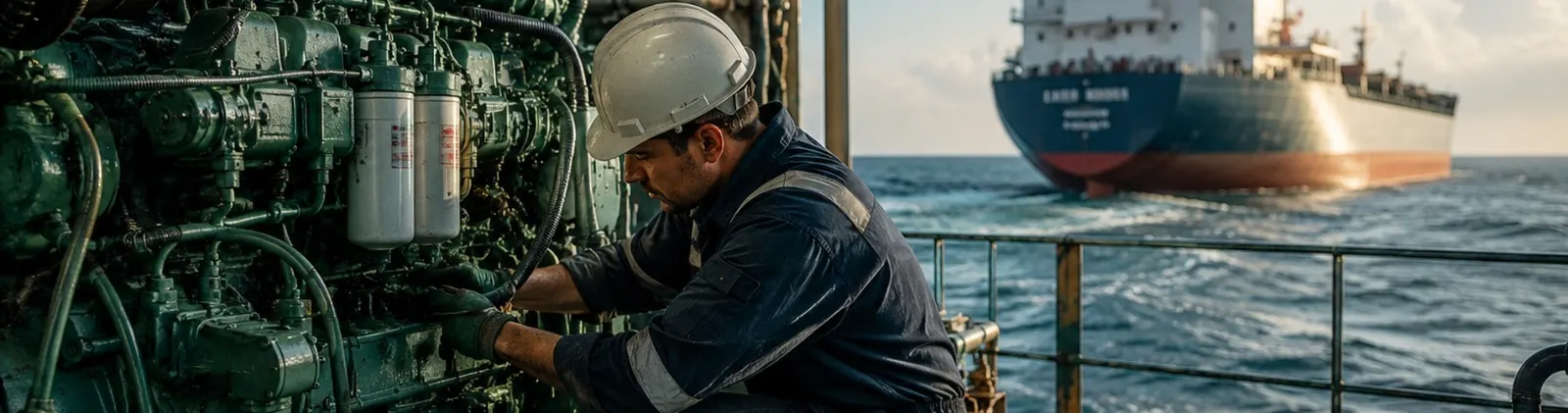
The main engine is the very heart of a ship. High wear parts such as fuel injection
equipment, turbochargers, liners, pistons, and governor parts must always be available
as genuine spares.
Electrical & Control Systems
The advanced technologies used in modern ships include automation systems provided by
manufacturers such as Siemens, Honeywell, Kongsberg, and Yokogawa. PCB boards, relays,
sensors, and other components of HMIs can sometimes be hard to source – effective
inventory management is key.
Generator Systems
The auxiliary generators provide power for all kinds of equipment, from lights to
navigation devices. The availability of backup AVRs, voltage regulators, cooling
systems, and brushes guarantees an uninterrupted power supply when the main engines
undergo servicing.
Hydraulic & Deck Machinery
Winches, cranes, and steering mechanisms are continuously subjected to mechanical stress.
Seal kits, hydraulic valves, and pumps must feature in every ship’s list of critical
spares.
How Poor Marine Spare Parts Planning Creates Hidden Costs
The real price of bad spare parts management is much more than the cost of an emergency
buy. The cost of charter penalties, port demurrage fees, crew overtime, emergency
freight charges, and the loss of reputation due to missed schedules all add up fast.
Sometimes, a ₹200 part that is not available at the right time results in lakhs of
consequential losses.
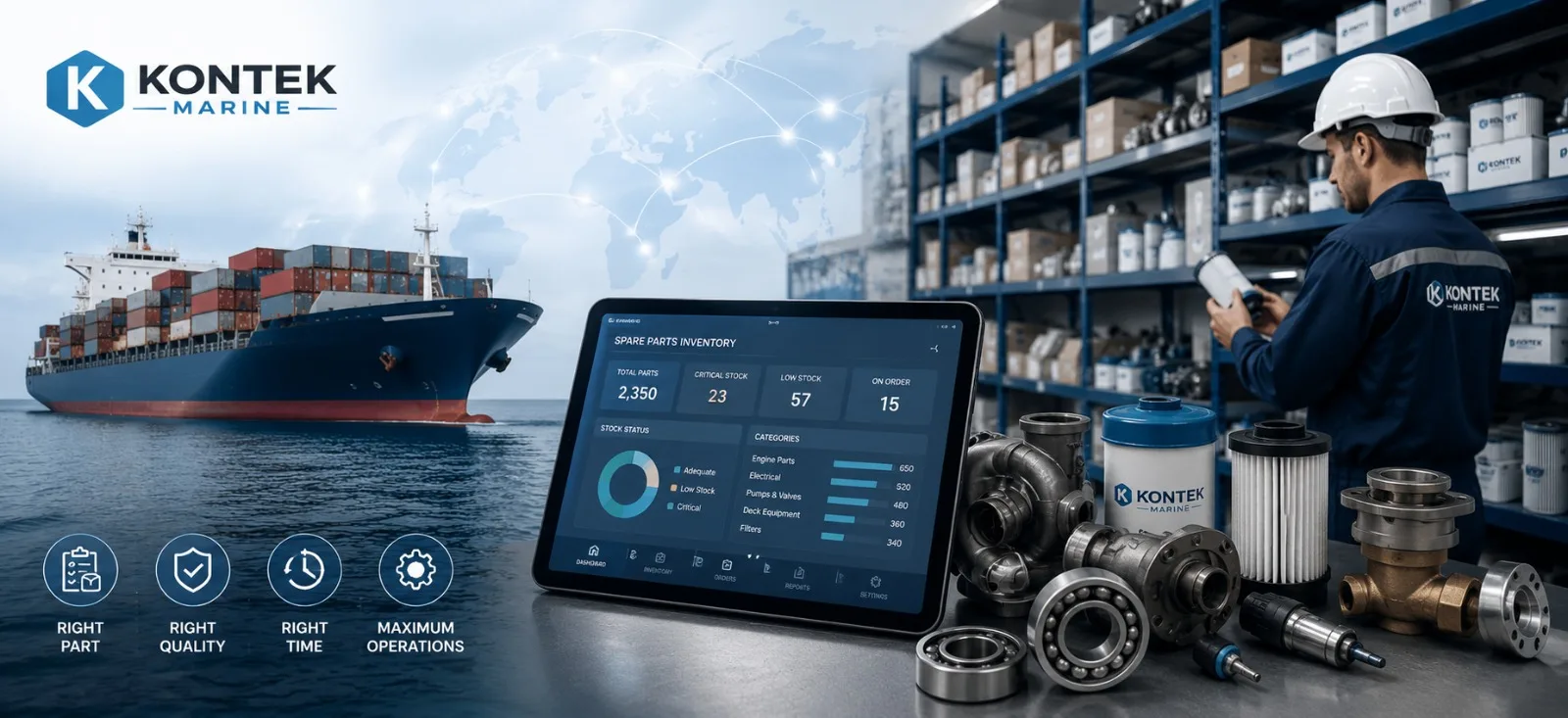
Operators can benefit from the expertise of a specialist marine spare parts supplier such
as Kontek Marine, which can provide more than just parts sourcing, but also advice on
alternatives when preferred parts are affected by supply chain issues and you can easily
contact with Kontek Marine team for any information.
Conclusion
Efficient management of marine spare parts is not a back-office activity; rather, it
forms an essential foundation of marine efficiency. If you want to cut downtime costs
while meeting international marine regulations, consider using our services as an
effective way to reap tangible benefits from your investment in spare parts management.
No matter if you have just one ship or an entire commercial fleet, we are ready to serve
your needs when it comes to marine spare parts, no matter what marine or offshore
equipment you use.