9 may 2026
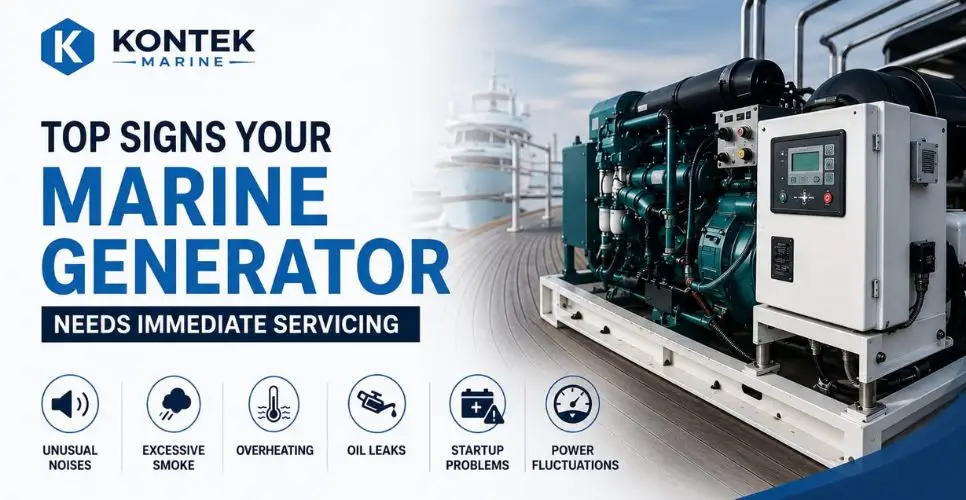
Top Signs Your Marine Generator Needs Immediate Servicing
In the marine industry, you know how vital a generator can be to your ship, from navigation and
lighting to safety and communication equipment. Failure to do this at sea can be expensive and
hazardous.
Fortunately, generators don't often fail without warning. They give signs. Detecting those signs in
their early stages can be the difference between a service call and a complete engine overhaul.
We at Kontek Marine have been associated with owners, operators, and offshore teams in India as well as
abroad. So, after this experience, here is the list of the best indicators to pay attention to when it
comes to your marine generator right away.
Unusual Noises Coming from the Generator
A healthy generator will have a uniform and continuous hum. The first warning is when you hear any
knocking, rattling, grinding, or banging noises. These sounds usually indicate loose parts, worn
bearings, or internal mechanical problems.
Do not dismiss unusual noises and think that they will disappear. They tend to worsen if not addressed,
in most cases.
Excessive Smoke or Change in Exhaust Color
One of the easiest ways to know how well a generator is working is by watching the smoke that it
generates. These are the meanings of various colors:
- Black smoke typically indicates the engine is
running too rich, usually due to a clogged air filter or a fuel system problem.
- white smoke , it may be due to the leaking of
coolants into the combustion chamber.
- Blue smoke is released; it is a possible
indication of oil burning, which is a symptom of worn piston rings or valve seals.
Any color other than light grey or almost clear exhaust should be thoroughly checked in the marine to
discuss in kontek marine.
Trouble starting or shutdowns.
When your generator is not starting as quickly as usual, stalling shortly after starting, or turning
off unexpectedly while running, there is a problem. Fuel delivery issues, defective starter motors,
dirty fuel injectors, or battery or alternator problems can cause this.
Mid-operation shutdowns can be especially problematic as they can cause disruption to mission-critical
onboard systems when most needed.
Voltage or Frequency fluctuations
A generator should have a steady output. If the lights flicker, sensitive electronics are misbehaving,
or voltage or frequency spikes are seen on monitoring systems, the generator is not functioning
properly.
Fluctuating voltage can cause damage to other electrical systems and instruments aboard the plane. It
also could indicate a problem with the alternator, voltage regulator, or control panel.
Excessive fuel or oil usage
The generator is running harder than usual and/or between maintenance schedules if it is being
refuelled more often than scheduled. It typically indicates inefficiency due to worn components, dirt on
the filters, or inadequate load management.
The more you use it, the higher your operating expenses will be. This is a time that you can save from
much larger expenses later on because of a service check.
Overheating
Marine generators find tough conditions to work in, but overheating is never normal. If the
temperatures are high or if the generator is shutting down due to thermal reasons, the cooling system
should be inspected right away.
Common reasons are: clogged cooling passages, inadequate coolant, bad heat exchangers, or thermostat
failure. Without the proper cooling, the engine can be permanently damaged by overheating.
Visible Leaks
Any oil, fuel, or coolant leakage around the generator is a definite warning sign. Any trickle should
not be ignored, no matter how insignificant it might seem. Over time, leaks can cause extensive damage
to the interior, can be a fire hazard, and can get worse rapidly.
Inspections can often be done visually, which helps to identify leaks before they get into the serious
category.
It Has Been a While Since the Last Service
Sometimes you don't notice any symptoms, but if the last maintenance on your generator was more than
the manufacturer's recommended time, it is time to take action. Preventive maintenance is always more
cost-effective and safe than reactive maintenance.
The sea is a cruel and tough place. Excessive wear of parts is caused by salt air, humidity, and
continuous movement. A good maintenance routine ensures your generator is operating at peak efficiency.
How Kontek Marine Can Help
Routine inspection, diagnosis, and full generator overhaul are all included in marine generator service
at Kontek Marine. We cover all major brands and models of generators and operate them according to
manufacturers' instructions and international maritime standards, making sure your equipment is safe and
reliable.
Additionally, we can provide the correct and compatible spare parts promptly and reduce the waiting
time and downtime of your vessel.
Please visit us or contact kontek marine, our sales team at sales@kontekmarine.com, or
call us at
7303620603. We have our office in New Delhi and work for you across the globe.