
Component guide
Gas turbine hot gas path parts: functions, wear and sourcing
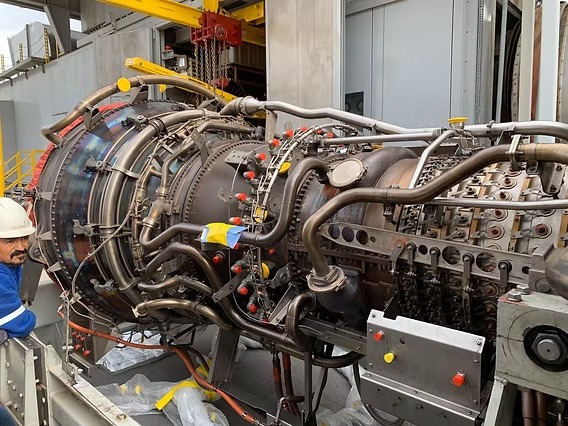
Hot gas path parts operate in the most severe thermal environment of the machine. Their condition drives reliability, emissions, vibration and maintenance intervals.
Most gas turbine failures that lead to forced outages are linked to the hot gas path. The compressor creates pressure, the combustor creates heat, and then the turbine converts that energy into shaft power. The parts closest to the flame face and the high-energy flow are the most likely to show gradual wear or sudden damage.
When sourcing these parts, the goal is not simply to buy a similar-looking item. It is to buy the correct part for the exact frame, stage, nozzle configuration and site conditions. A mismatch here causes reduced efficiency, increased vibration, hot spots and repeat repairs.
1. Understand what sits in the hot gas path
The hot gas path typically includes the combustor components, transition pieces, first-stage nozzles, turbine blades or buckets, shrouds, seals, and in some configurations, the nozzle guide vanes or stator segments. Each item has its own thermal, stress, and oxidation profile.
Gas turbine hot section parts are usually made from advanced alloys. Nickel-based and cobalt-based superalloys are common because they retain strength under high temperatures. Coatings, cooling holes, and precise dimensional control matter as much as the base alloy. That is why a part cannot be judged only by the material nameplate.
2. Watch for the earliest wear signals
- Combustion liner cracking or distortion can raise local temperature and shorten component life.
- Nozzles and vanes may show oxidation, coating loss, profile distortion, or leakage between segments.
- Buckets can develop blade tip wear, creep, oxidation, corrosion, and foreign object damage.
- Shrouds and seals can create leakage paths if they wear unevenly or move out of tolerance.
- Transition pieces or combustor components may show thermal fatigue from repeated start-stop cycles.
Inspection records matter. A trend in clearance changes, metal temperature, vibration spikes, or exhaust pattern shifts often tells the real story before a catastrophic failure develops.
3. Use sourcing rules that protect reliability
Before ordering a hot gas path part, confirm the frame, stage, part number, drawing revision, material code, and any running-hour or time-in-service threshold. Larger units and dual-fuel plants often have more configuration variations than expected. The wrong stage or the wrong blade family can look similar from the outside but fail under operating load.
Ask the supplier for the exact governing document, manufacturing source, traceability details, heat numbers where required, and any test or inspection records. The best suppliers can explain the difference between an interchangeable item and a technically acceptable one.
4. Quality checks that reduce expensive rework
Inspect incoming hot section parts before they are installed. This includes dimensional checks, comparison against the drawing, a visual review for distortion and coating damage, and verification of all traceability tags. Some parts also require non-destructive testing, borescope access checks, or witness testing before release.
Do not rely on a supplier claim alone. A good purchase package should include a clear statement of condition, the part reference, quantity, repair or manufacturing status, and any inspection certificate that your site requires.
5. Build a procurement plan around outages
When outage windows are short, lead time and shipping risk become as important as unit cost. Identify critical spares early, compare repair versus replacement economics, and define whether you are stocking an item for one outage or carrying a strategic inventory for multiple units.
A sound outage plan ties together inspection outcomes, the part numbers required, preferred alternates, and delivery lead time. This is where many plants avoid emergency procurement and schedule-driven cost overruns.
6. Common questions
Can a hot gas path part be replaced with a general-purpose equivalent? Only if the engineering review confirms the exact design, fit, metallurgy, clearances, and operating limits. Equivalency is a technical decision, not a sales statement.
What is the first thing to verify before buying a turbine blade or nozzle? The exact OEM or drawing reference, frame/stage, and revision. A similar-looking component with a different cooling pattern or seal geometry may not be acceptable.
Should the supplier provide a certificate? If your plant requires one, yes. Material and inspection certificates can be critical for high-temperature components and outage-sensitive repairs.
For plant owners, the key lesson is simple: hot gas path components should be sourced with engineering discipline, not only commercial urgency. When the thermal environment is extreme, even small specification gaps create large maintenance consequences.
Need help identifying the correct hot section component for your turbine model or outage scope? Contact AGO Aviation with the OEM, model, stage and part number and we will review the requirement with you.